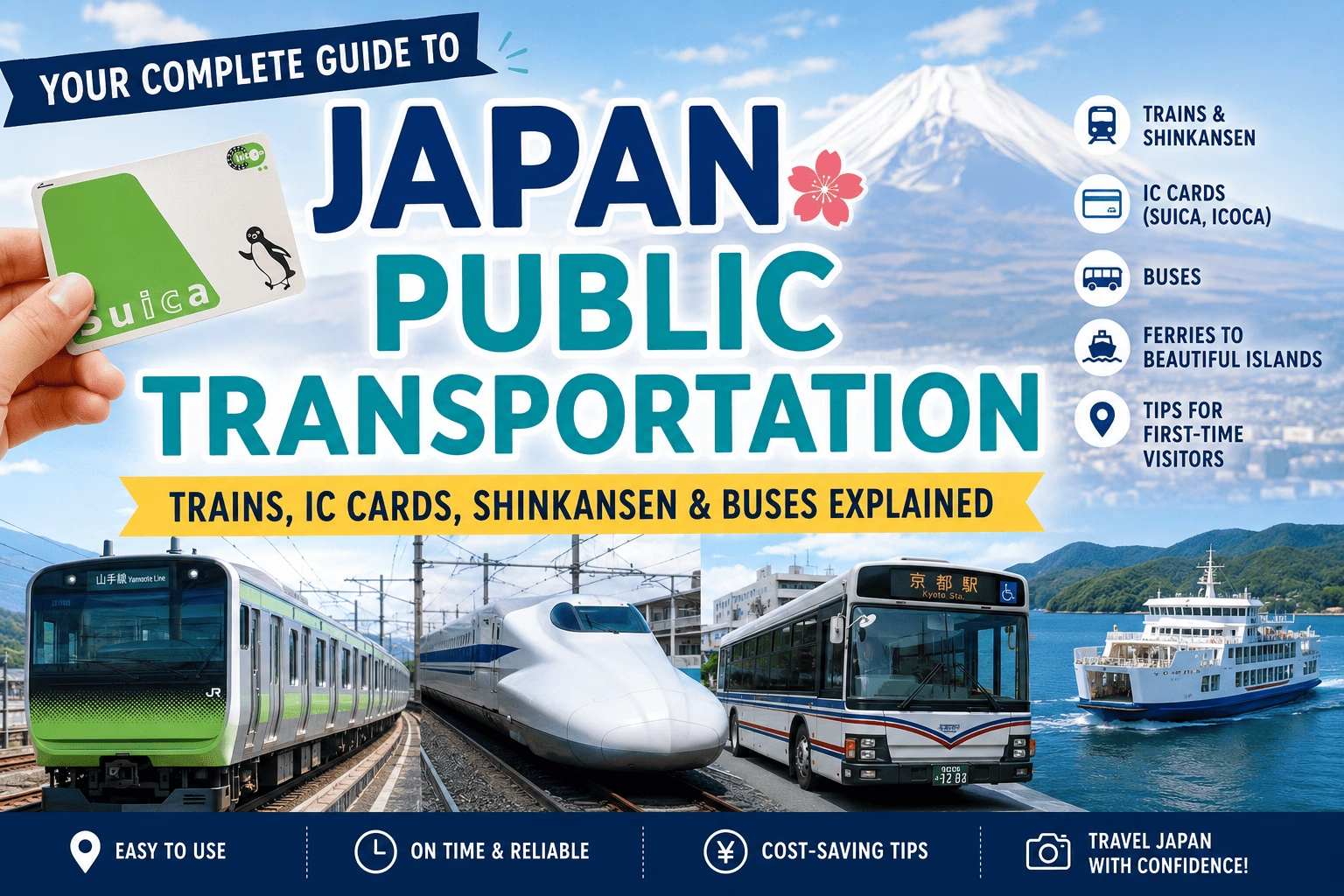
- Trains, IC Cards, Shinkansen & Buses Explained for First-Time Visitors
- Why Japan’s Public Transportation Is World-Class
- Understanding IC Cards
- Should You Buy a JR Pass?
- Riding the Shinkansen (Bullet Train)
- Understanding Local, Rapid, and Express Trains
- Taking Buses in Japan
- Traveling to Japan’s Beautiful Islands
- Using Google Maps in Japan
- Transportation Tips for First-Time Visitors
- Common Transportation Mistakes to Avoid
- Frequently Asked Questions
- Final Thoughts
Trains, IC Cards, Shinkansen & Buses Explained for First-Time Visitors
Japan is famous for having one of the world’s most efficient public transportation systems.
Trains arrive on time, stations are clean, and traveling between cities is surprisingly easy. However, for first-time visitors, Japan’s transportation network can seem overwhelming.
Should you buy a JR Pass? What is a Suica card? What’s the difference between local and express trains? How do you reach Japan’s beautiful islands?
This guide answers all of those questions so you can travel around Japan with confidence.
Why Japan’s Public Transportation Is World-Class
Japan’s transportation system is trusted by millions of people every day.
Here are a few reasons why travelers love it:
- Trains are extremely punctual.
- Stations are clean and safe.
- English signs are available in most major cities.
- Google Maps provides accurate train routes and departure times.
- You can travel almost anywhere in Japan without renting a car.
Whether you’re visiting Tokyo, Kyoto, Osaka, or remote regions, public transportation is usually the easiest way to get around.
Understanding IC Cards
One of the first things you should buy after arriving in Japan is an IC card.
An IC card is a rechargeable smart card that allows you to tap in and out of train stations and buses without buying individual tickets.
Popular IC Cards
- Suica (Tokyo area)
- PASMO (Tokyo area)
- ICOCA (Kansai region)
Although each card is issued in a different region, they are generally compatible across most major transportation networks throughout Japan.
You can also use IC cards at many convenience stores, vending machines, and some restaurants, making them useful beyond transportation.
Should You Buy a JR Pass?
The Japan Rail Pass (JR Pass) is popular among international travelers, but it isn’t always the best value.
A JR Pass may be worth considering if you plan to:
- Travel between several major cities in a short period.
- Take multiple Shinkansen (bullet train) journeys.
- Explore different regions across Japan.
However, if your trip focuses on just one or two cities, purchasing individual tickets is often less expensive.
Before buying a JR Pass, compare the total cost of your planned train journeys.
Riding the Shinkansen (Bullet Train)
Japan’s Shinkansen is one of the fastest and most comfortable ways to travel.
With speeds of up to 320 km/h (200 mph), it connects many of Japan’s major cities quickly and efficiently.
Tips for Riding the Shinkansen
- Arrive at the platform a few minutes early.
- Large luggage may require advance reservation on certain routes.
- Reserved and non-reserved seats are available.
- Food and drinks are allowed onboard.
- Enjoy the scenery—on clear days, you may even see Mount Fuji.
Understanding Local, Rapid, and Express Trains
One thing that surprises first-time visitors is that not every train stops at every station.
Local Train
Stops at every station.
Best for short-distance travel.
Rapid Train
Skips smaller stations to reach destinations faster.
Express or Limited Express
Stops only at major stations and may require an additional fare.
Always check Google Maps before boarding to make sure you’re taking the correct train.
Taking Buses in Japan
Although trains are the most popular form of transportation, buses are essential in many destinations.
You’ll likely use buses when visiting:
- Kyoto
- Mountain villages
- National parks
- Small towns
- Remote islands
Some buses require you to board through the rear door and exit through the front, while others operate differently depending on the region.
Most city buses now accept IC cards.
Traveling to Japan’s Beautiful Islands
Japan is home to thousands of islands, many of which are accessible by public transportation.
Depending on the destination, you may travel by:
Ferry
Many islands are connected by comfortable ferry services.
Popular island destinations include:
- Naoshima
- Shodoshima
- Yakushima
- Okinoshima
- Ogasawara Islands
Domestic Flights
For more distant islands such as Okinawa or the Yaeyama Islands, domestic flights are often the fastest option.
Rental Cars
On some islands, renting a car is recommended to explore beaches, scenic viewpoints, and local villages.
Planning transportation in advance makes island travel much easier.
Using Google Maps in Japan
Google Maps works exceptionally well throughout Japan.
It can show:
- Train departure times
- Platform numbers
- Transfer stations
- Walking directions
- Bus routes
- Estimated travel costs
For most travelers, Google Maps is all you’ll need to navigate Japan’s transportation system.
Transportation Tips for First-Time Visitors
Before your trip, remember these helpful tips:
✅ Carry a charged phone or portable battery.
✅ Avoid rush hour if possible, especially in Tokyo.
✅ Stand in line while waiting for trains.
✅ Keep conversations quiet on public transportation.
✅ Have your IC card ready before entering ticket gates.
Common Transportation Mistakes to Avoid
Many first-time visitors make these simple mistakes:
Boarding the Wrong Train
Not every train stops at every station.
Always double-check the train type before boarding.
Missing the Last Train
Unlike some countries, trains do not run all night.
If you’re staying out late, check the last departure time in advance.
Carrying Too Much Luggage
Large suitcases can be difficult to manage during busy travel periods.
Consider using Japan’s luggage delivery service to send your bags between hotels.
Forgetting to Recharge Your IC Card
Most stations have machines where you can easily add money to your card.
Keeping your balance topped up will save time during your trip.
Frequently Asked Questions
Is public transportation safe in Japan?
Yes. Japan has one of the safest public transportation systems in the world.
Can I use a credit card everywhere?
Not always.
Many ticket machines now accept credit cards, but carrying some cash is still recommended.
Is English available at stations?
Most major stations include English signs, announcements, and ticket machines with English language options.
Do I need a rental car?
Not for most city trips.
However, a rental car can be useful when exploring remote islands or rural areas.
Final Thoughts
Japan’s transportation system may look complicated at first, but it’s one of the easiest and most reliable ways to explore the country.
With an IC card, Google Maps, and a little planning, you’ll be able to travel confidently from vibrant cities to peaceful countryside villages—and even to Japan’s breathtaking islands.
If you’re planning to discover destinations beyond Tokyo, Kyoto, and Osaka, don’t miss our island travel guides on ShimaSuki, where you’ll find practical transportation tips, ferry information, and local recommendations for Japan’s hidden island gems.