
Planning a trip to Japan in October 2026?
October is one of the most comfortable months to explore Japan. The intense summer heat is usually fading, autumn food is everywhere, and fall colors begin spreading from Hokkaido and the mountains toward the rest of the country.
But October in Japan can be surprisingly different depending on where you go. You might need a light jacket in Tokyo, warmer layers in northern Japan, and relatively light clothing in Okinawa.
There are also some important things specific to October 2026 that international visitors should know — including a national holiday, this year’s autumn foliage outlook, and a major change to Japan’s tax-free shopping system immediately after October ends.
Here are 15 things to know before traveling to Japan in October 2026.
- 1. October Is One of Japan’s Most Comfortable Travel Months
- 2. Tokyo Can Still Be Warm During the Day
- 3. Hokkaido and Tohoku Are Much Colder
- 4. Don’t Expect Peak Autumn Leaves Everywhere
- 5. Autumn Colors Are Expected to Be Later in 2026
- 6. October 12, 2026 Is a National Holiday
- 7. October Is Festival Season
- 8. Typhoons Are Less Common — But Still Possible
- 9. Bring Excellent Walking Shoes
- 10. Large Suitcases Need Extra Planning on Some Shinkansen
- 11. Prepare Your Arrival Information Before Flying
- 12. Keep Some Cash With You
- 13. October 2026 Is the Last Month Before a Major Tax-Free Shopping Change
- 14. October Is an Excellent Month for Japanese Food
- 15. Leave Some Flexibility in Your Itinerary
- Frequently Asked Questions
- Is October 2026 a good time to visit Japan?
- Can I see autumn leaves in Tokyo in October?
- Can I see autumn leaves in Kyoto in October?
- Do I need a winter coat in Japan in October?
- Is Japan crowded in October?
- Is October still typhoon season in Japan?
- Do I need to reserve Shinkansen trains in October?
- What happens to tax-free shopping in November 2026?
- Final Tips for Japan Travel in October 2026
1. October Is One of Japan’s Most Comfortable Travel Months
Expect cooler weather, but not everywhere
October generally brings much more comfortable conditions than midsummer.
According to the Japan National Tourism Organization (JNTO), the main typhoon season is largely over by the end of September, and October often offers pleasant weather for sightseeing, hiking, festivals and outdoor activities.
However, Japan stretches a long way from north to south, so there is no single “October weather.”
Kyushu can still feel quite warm, while Tohoku and Hokkaido can already become chilly.
ShimaSuki Tip: Do not pack for “Japan.” Pack for the specific regions on your itinerary.
2. Tokyo Can Still Be Warm During the Day

Pack layers instead of one heavy coat
JNTO’s climate data for Tokyo gives an average October high of around 22°C (72°F) and an average low of around 14°C (57°F).
That makes layers particularly useful.
A practical Tokyo packing combination is:
- T-shirts or long-sleeved shirts
- A light jacket or cardigan
- Comfortable walking shoes
- A compact umbrella
- One slightly warmer layer for cool evenings
And don’t assume October 1 will feel like late autumn.
At the time of writing in late September 2026, forecasts even show Tokyo potentially reaching around 30°C on October 1, although short-range forecasts can change.
Check the latest forecast shortly before departure.
3. Hokkaido and Tohoku Are Much Colder
Northern Japan enters autumn earlier
If your itinerary includes Hokkaido or Tohoku, prepare for significantly cooler conditions than Tokyo, Osaka or Kyoto.
JNTO specifically notes that Tohoku can become quite chilly during October.
Warm layers become increasingly important, especially if you are visiting mountains or traveling later in the month.
If you plan to hike, do not rely on temperatures reported for nearby cities. Mountain conditions can be substantially colder.
4. Don’t Expect Peak Autumn Leaves Everywhere
Tokyo and Kyoto are usually later
One of the most common mistakes made by October visitors is assuming that all of Japan will already be covered in red and orange leaves.
It won’t.
JNTO notes that northern areas and higher elevations reach peak autumn colors earlier, while travelers generally have to wait longer for the best colors in warmer areas such as Tokyo and Kyoto.
For October, look toward places such as:
- Hokkaido
- Tohoku
- Nagano and other mountainous areas
- High-altitude destinations in central Japan
If your main goal is seeing autumn leaves in central Tokyo or central Kyoto, November is generally a better target.
5. Autumn Colors Are Expected to Be Later in 2026
This year’s forecast matters
This is particularly important for travelers visiting in 2026.
Weathernews’ September 2026 autumn foliage forecast expects peak colors across much of Japan to arrive later or slightly later than average, largely because of warmer temperatures.
For example, the current outlook places the broader foliage season roughly at:
- Hokkaido: mid-September to early November
- Tohoku: early October to late November
- Kanto: mid-October to mid-December
- Kansai: late October to mid-December
These are regional windows, not guaranteed peak dates for individual destinations.
Weather can change foliage timing, so check a current forecast again a few days before traveling.
Good to Know: If you’re visiting Tokyo and Kyoto in early or mid-October 2026 specifically for autumn leaves, manage your expectations. Consider adding a higher-altitude or northern destination to your itinerary.
6. October 12, 2026 Is a National Holiday
Sports Day can affect your travel plans
Monday, October 12, 2026, is Sports Day(スポーツの日 / Supōtsu no Hi), an official Japanese national holiday.
Because it falls on a Monday, October 10–12 creates a three-day weekend for many people in Japan.
That can mean increased domestic travel and higher demand around popular destinations.
If your itinerary overlaps with this weekend, consider reserving:
- Shinkansen seats
- Limited express trains
- Hotels
- Popular attractions
- Rental cars
earlier than you otherwise might.
7. October Is Festival Season
Look beyond Tokyo and Kyoto
October is a wonderful month to experience traditional Japanese festivals.
One of the best-known examples is the Takayama Autumn Festival(秋の高山祭) in Gifu, held annually on October 9 and 10 around Sakurayama Hachimangu Shrine.
Other October events around Japan include traditional float festivals, shrine festivals and harvest celebrations.
Festival schedules can sometimes be affected by weather or local circumstances, so always check the organizer’s official information before making a special trip.
8. Typhoons Are Less Common — But Still Possible
Don’t completely ignore the weather
JNTO describes the main typhoon season as largely over by the end of September.
“Largely over” does not mean “impossible.”
Japan can still experience tropical systems and periods of heavy rain in autumn.
If severe weather approaches, transportation may be disrupted, including:
- Shinkansen services
- Domestic flights
- Ferries
- Local trains
- Highway buses
Check Japan Meteorological Agency information and your transportation operator’s official website when bad weather is forecast.
What to Do If Your Train Is Cancelled: Do not rely solely on Google Maps. Check the railway company’s official service information, because cancellation and restart information can change quickly.
9. Bring Excellent Walking Shoes
You may walk more than you expect
A Japan itinerary can involve a surprising amount of walking.
Large stations themselves can require long walks, and destinations such as Kyoto combine train or bus travel with significant walking between attractions.
October’s milder weather makes walking much easier than during midsummer, but comfortable shoes remain essential.
New shoes that have never been worn before are usually not the best choice for a sightseeing-heavy trip.
10. Large Suitcases Need Extra Planning on Some Shinkansen
Know the 160 cm rule
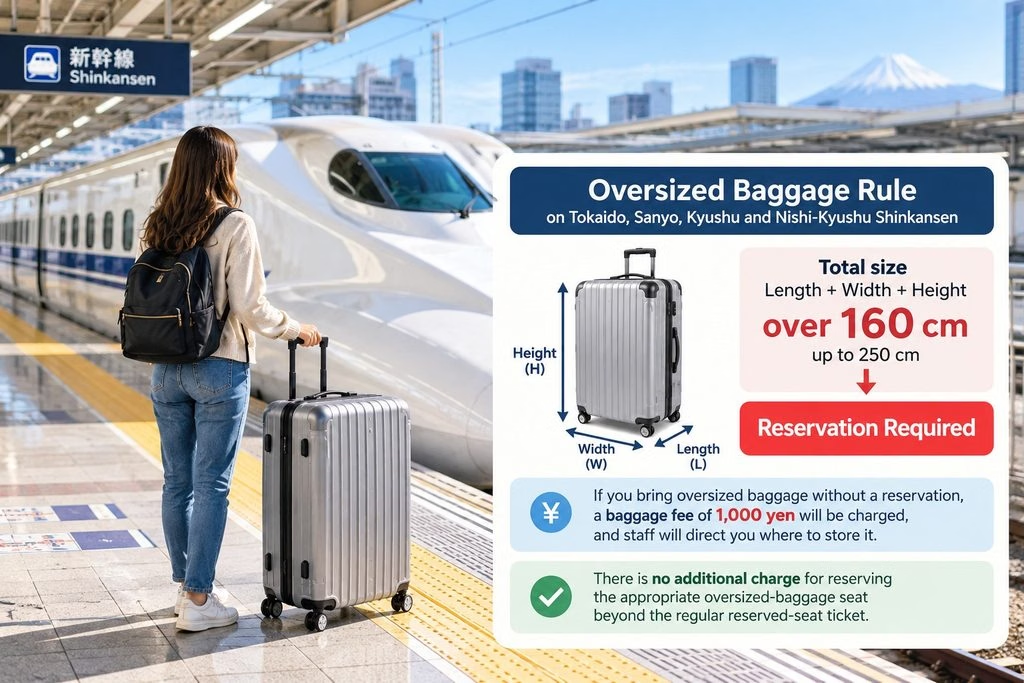
If you are traveling on the Tokaido, Sanyo, Kyushu or Nishi-Kyushu Shinkansen with oversized luggage, check your suitcase dimensions before boarding.
Baggage whose length + width + height totals more than 160 cm and up to 250 cm generally requires a reservation for an appropriate seat with oversized baggage space.
On the Tokaido Shinkansen, bringing qualifying oversized baggage without the required reservation can result in a ¥1,000 baggage fee, and staff will direct you where to store it.
There is no additional charge for reserving the appropriate oversized-baggage seat itself beyond the applicable reserved-seat ticket.
ShimaSuki Tip: Japan’s luggage delivery services can make multi-city travel much easier. Instead of carrying a large suitcase from Tokyo to Kyoto on a crowded train, consider sending it ahead and traveling with a smaller overnight bag.
11. Prepare Your Arrival Information Before Flying
Visit Japan Web can simplify arrival procedures
Japan’s Digital Agency operates Visit Japan Web, which allows travelers to register information used for arrival procedures, including immigration and customs.
You can create an account, register your trip and complete the relevant information before arriving.
At the airport, travelers can display the required QR code for applicable procedures.
Complete this before your flight when possible rather than trying to enter all your information after landing with airport Wi-Fi.
Good to Know: Use the official Visit Japan Web service. Be cautious about unofficial websites that may appear in search results.
12. Keep Some Cash With You
Japan is more cashless, but cash is still useful
Credit cards and electronic payments are widely accepted in many urban stores, hotels, convenience stores and restaurants.
However, you may still encounter cash-only situations at:
- Small restaurants
- Temples and shrines
- Rural businesses
- Local markets
- Older ticket machines
- Small attractions
You do not necessarily need to carry a huge amount of cash, but arriving with no yen at all can make travel unnecessarily difficult.
Look for the word:
Cash(現金 / genkin)
when checking payment information.
13. October 2026 Is the Last Month Before a Major Tax-Free Shopping Change
This is especially important for late-October travelers
Japan’s tax-free shopping system changes on November 1, 2026.
For eligible purchases made through October 31, 2026, the existing system remains in place, under which eligible international visitors can generally purchase qualifying goods at tax-exclusive prices at participating tax-free stores when requirements are met.
For purchases made from November 1, 2026, Japan switches to a refund system.
Under the new system, eligible shoppers will pay the tax-inclusive price at the store first. After Customs confirms that the qualifying goods are being taken out of Japan at departure, the amount equivalent to consumption tax can be refunded according to the applicable procedure.
This creates an unusual situation for travelers whose vacation crosses from October into November.
For example, if you are in Japan from October 28 to November 5, 2026, the procedure applicable to a purchase made on October 30 is different from one made on November 2.
Watch Out: The change is based on the purchase date, not simply the date you entered Japan.
If shopping is a major part of your trip, check the Japan Tourism Agency’s latest tax-free guidance before purchasing.
14. October Is an Excellent Month for Japanese Food
Look for seasonal ingredients
Autumn is strongly associated with food in Japan.
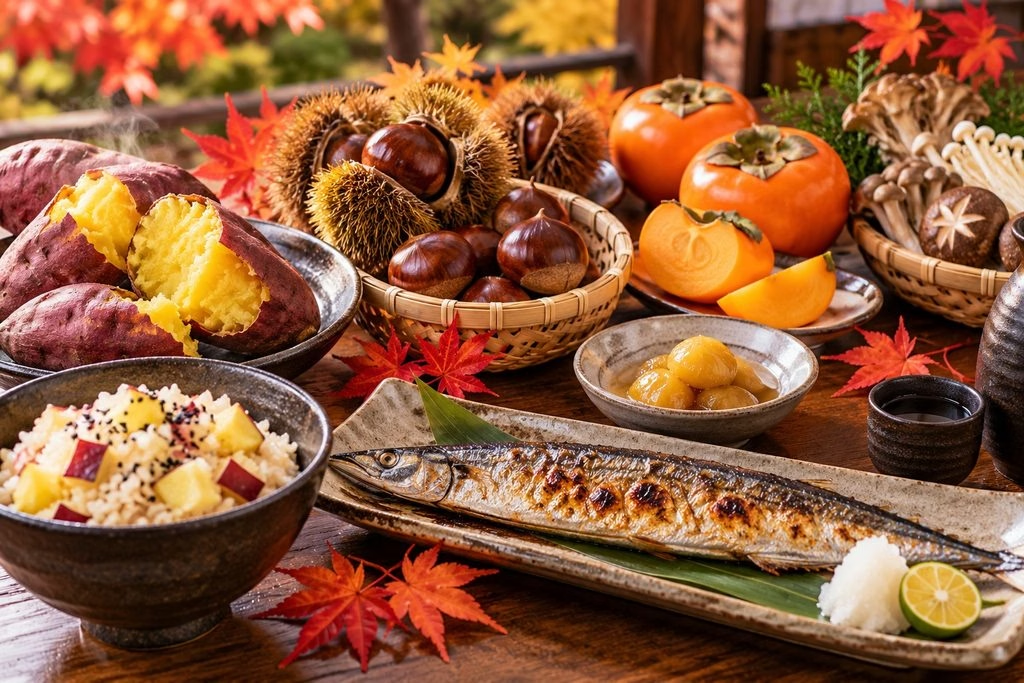
JNTO highlights seasonal products including Japanese pears, persimmons, newly harvested rice, soba and sake.
You may also encounter seasonal dishes and sweets featuring ingredients such as:
- Sweet potato(さつまいも / satsumaimo)
- Chestnut(栗 / kuri)
- Persimmon(柿 / kaki)
- Mushrooms(きのこ / kinoko)
- Pacific saury(秋刀魚 / sanma)
Convenience stores, cafés and supermarkets also release large numbers of limited autumn products.
You don’t need to visit an expensive restaurant to experience seasonal Japanese food.
15. Leave Some Flexibility in Your Itinerary
October rewards flexible travelers
It is tempting to schedule every hour of a Japan trip, especially on a first visit.
But October is a month when a little flexibility can improve your experience.
Autumn foliage changes with the weather. Rain can alter hiking plans. Festivals can create unexpected crowds. And sometimes you’ll discover a neighborhood, café or small shrine that you simply want to explore longer.
Reserve the things that genuinely need reservations, but leave some breathing room elsewhere.
Japan is often just as enjoyable between the famous attractions as it is at them.
Frequently Asked Questions
Is October 2026 a good time to visit Japan?
Yes. October generally offers comfortable sightseeing weather, seasonal food, festivals and the beginning of autumn foliage across northern and mountainous Japan. Temperatures vary considerably by region, however.
Can I see autumn leaves in Tokyo in October?
Some color may appear, especially later in the month and depending on location, but October is generally too early for Tokyo’s main peak. In 2026, foliage across many parts of Japan is forecast to be later or slightly later than average.
Can I see autumn leaves in Kyoto in October?
Early and mid-October are generally too early for central Kyoto’s famous autumn foliage. The 2026 outlook currently suggests later-than-average or slightly later-than-average timing across much of Kansai.
Do I need a winter coat in Japan in October?
Usually not for Tokyo, Osaka or Kyoto during much of October, although evenings can be cool. Northern Japan, high-altitude destinations and late-October trips may require warmer clothing.
Is Japan crowded in October?
Popular destinations can still be busy, especially around festivals, autumn foliage destinations and the October 10–12 three-day weekend in 2026. Reserving accommodation and important transportation in advance is sensible.
Is October still typhoon season in Japan?
The main typhoon season is largely over by the end of September, according to JNTO, but tropical systems and severe weather are still possible. Continue checking forecasts during your trip.
Do I need to reserve Shinkansen trains in October?
Not every Shinkansen trip requires an advance reservation, but reservations can be useful during busy periods. Travelers with oversized baggage on applicable Shinkansen routes should also check the specific baggage reservation rules.
What happens to tax-free shopping in November 2026?
Japan introduces a refund-based tax-free shopping system for purchases made from November 1, 2026. Eligible travelers will generally pay the tax-inclusive price first and receive the consumption-tax equivalent after the required departure confirmation.
Final Tips for Japan Travel in October 2026
October can be a fantastic month to explore Japan, but the key is understanding how different the country can be from north to south.
Pack layers rather than preparing for one fixed temperature. Don’t assume Kyoto and Tokyo will already have peak autumn colors. Be aware of the October 12 national holiday, reserve oversized luggage space where required, and pay special attention to Japan’s tax-free shopping rules if your trip crosses into November.
Most importantly, check weather, transport and event information again shortly before you travel.
Japan changes quickly — and a little preparation can prevent a small travel problem from becoming a stressful one.
Read Next on ShimaSuki
Continue planning your trip with:
Japan Public Transportation Guide: How to Use Trains, Buses and IC Cards
Japan Convenience Store Guide: What First-Time Visitors Need to Know
Cash, Credit Cards or IC Cards? How to Pay in Japan in 2026
Where Are the Trash Cans in Japan? A Practical Guide for Tourists